
The Adaptive Operational Maturity Model™
Built for real-world operations. Designed for sustainable lifesaving.
Prevention + Adaptive Operational Maturity™ = Sustainable Lifesaving
The Adaptive Operational Maturity Model™ transforms animal sheltering from static assessment to adaptive, signal-driven operations—helping leaders make better decisions as conditions change—resulting in more animals protected and more lives saved.
Animal shelters operate in environments where conditions can change rapidly and unpredictably. Traditional models rely on fixed evaluations and periodic improvements, but these approaches often fall short during real-world disruption.
The Adaptive Operational Maturity Model™ provides a framework for continuous situational awareness and responsive action, enabling shelters to adapt in real time while maintaining lifesaving as the primary outcome.
Why Adaptive Operational Maturity Matters
Lifesaving is the goal. The Adaptive Operational Maturity Model™ is how we achieve it. The first signal-driven Adaptive Maturity Model™ designed for animal sheltering.
Every day, animal shelters operate under changing conditions:
Intake surges without warning
Length of stay increases quietly until capacity is exceeded
Medical and behavioral needs escalate under pressure
Staffing, space, and resources fluctuate constantly
Community expectations can change rapidly
In this environment, decisions cannot wait—and outcomes are immediate.
Animals do not experience shelter operations as a plan or a process. They experience them in real time. And when systems fail to adapt, the consequences are not theoretical. They are permanent.
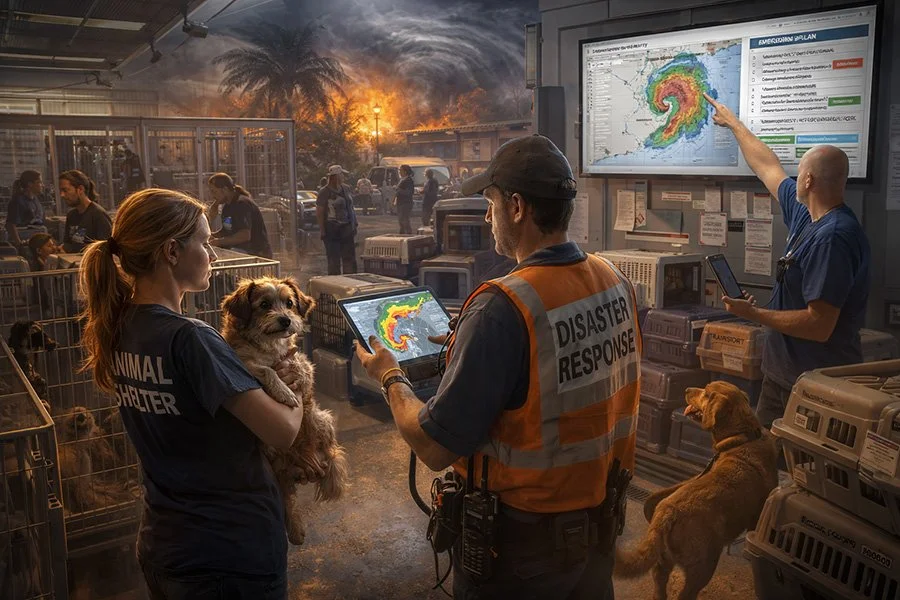
Animal Sheltering Is Not a Static Environment
Why Traditional Maturity Models Fall Short
Maturity models have long been used to improve performance in structured environments.
Maturity models have long been used to improve performance in structured environments.
They provide:
Defined levels of progression
Standardized best practices
Periodic assessments
Long-term improvement pathways
These approaches work well in industries where change is gradual, and outcomes can be adjusted over time. Animal sheltering is different.
In shelter operations:
Conditions shift daily
System load fluctuates rapidly
Decisions must be made immediately
Outcomes cannot be reversed
Traditional models were designed to improve systems over time. Animal shelters must perform under pressure—where time is limited and most importantly, lives are at stake.
“The same system must perform in both routine and surge operating conditions.”
Operational Adaptive Maturity
Every shelter serves a different community and operates under different constraints. The ACSMM™ recognizes that sustainable lifesaving is not achieved through uniform solutions—but through practices that adapt to each shelter’s local environment.
Operational Adaptive Maturity means:
Advancing performance while adapting to real-world conditions
Aligning strategies with available resources and community dynamics
Maintaining lifesaving outcomes despite changing constraints
Each shelter’s path may differ. But the destination remains the same: responsible, sustainable lifesaving.
From Static Assessment to Adaptive Operational Execution
The Adaptive Maturity Model™ represents a fundamental shift:
From:
Static evaluation
Fixed roadmaps
Periodic improvement cycles
This is not about achieving a level. It is about responding effectively to real-world conditions as they occur.
To:
Continuous situational awareness
Signal-driven decision-making
Context-based execution
Lifesaving as a matter of practice and not the exception
What Signal-Driven Means in Practice
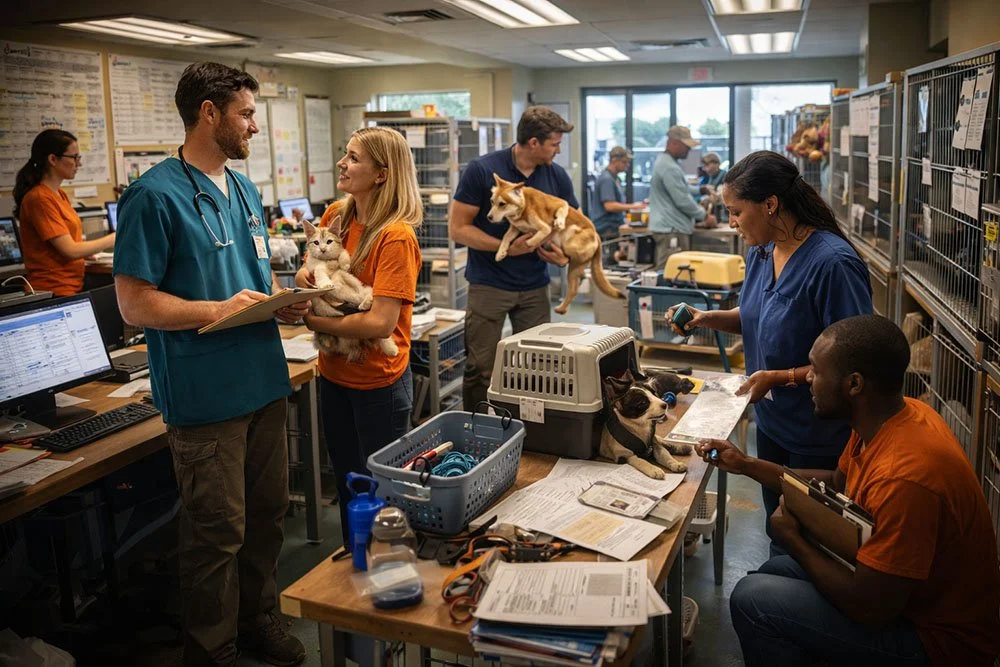
In an Adaptive Maturity Model™, decisions are guided by operational signals such as:
Shelter Load Factor (SLF)
Length of stay trends
Intake pacing and volume
Medical and behavioral risk indicators
Capacity thresholds and system strain
These signals:
Reveal conditions that are not always visible
Trigger timely adjustments in operations
Help leadership act before systems degrade
Instead of asking: “What level are we at?”
The better question becomes: “What is happening right now—and what must we do next?”
The ACSMM™ Difference
The Animal Care Shelter Maturity Model™ is the first maturity model designed specifically for the realities of animal sheltering.
It is:
Signal-driven, not checklist-driven
Adaptive, not static
Behavior-based, not aspirational
Context-aware, not one-size-fits-all
Domains are not static checklists. They are applied dynamically based on operational signals and context.
The result is a system that:
Supports consistent decision-making
Maintains performance under pressure
Adapts to changing conditions
Keeps lifesaving at the center of every action
Why Adaptive Operational Maturity Matters
Lifesaving success is not achieved through intention alone.
It Requires:
Structure
Visibility
Accountability
The ability to adapt under pressure
Adaptive maturity conditions shelters to ensure that:
Problems are seen early
Decisions are informed by real conditions
Systems respond before failure occurs
Without these operational behaviors, even the most dedicated organizations can experience:
Inconsistent outcomes
Hidden system strain
Decision fatigue
Gradual erosion of performance
A System Designed for What Matters Most
Our commitment to lifesaving drives the need for adaptive maturity. The Adaptive Maturity Model™ was built to meet the realities of animal sheltering—not an idealized version of it.
Because in this environment:
Conditions change quickly
Decisions matter immediately
And outcomes cannot be undone
Lifesaving is the goal. The Adaptive Operational Maturity Model™ is how we achieve it.
Contact Us Today
Ready to explore how the ACSMM™ can help your shelter thrive? Complete our Inquiry Form for more information today.