Beyond the Numbers: How ACSMM™ Expands the Definition of Shelter Success
Numbers Alone Don’t Explain Outcomes — Systems Do!
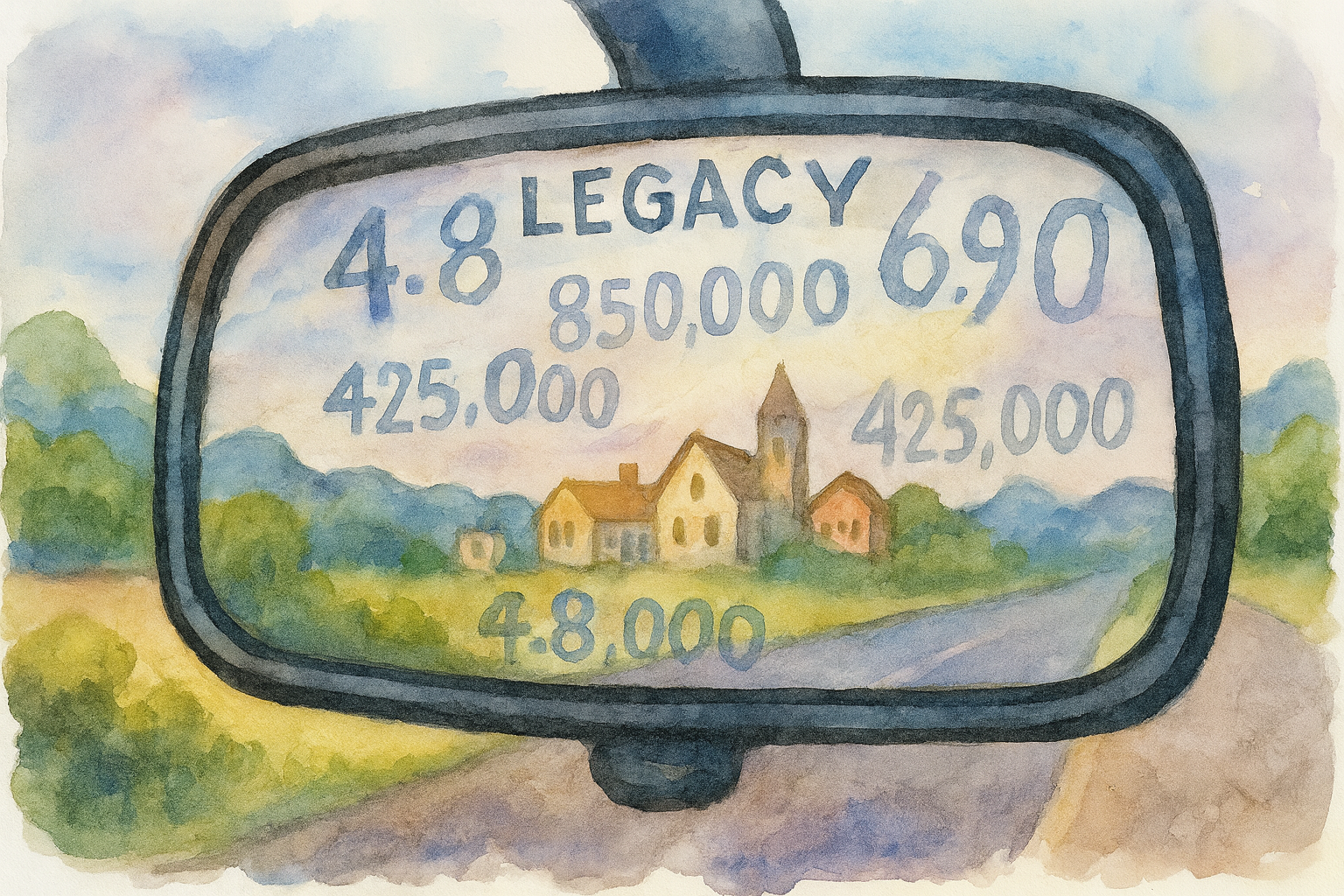
Legacy nonprofits ask shelters to drive by staring into the rearview mirror — fixated on numbers from the past, often conflicting, always partial. The ACSMM™ widens the view, giving shelters both a windshield and a compass: clear sight of the present and a defined path forward.
The Animal Welfare Industry and Numbers
The animal welfare industry places a heavy emphasis on statistics. However, if the underlying data is inaccurate, how can any resulting strategy be trusted? For instance, in 2024, national estimates for animal shelter intake ranged from 4.8M to 6.9M depending on source, while euthanasia figures varied between 425,000 and 850,000. When the field’s two largest legacy data sources present such different numbers, stakeholders—including shelters, policymakers, and donors—are left uncertain about which figures to believe and how these numbers translate to real-world impact for shelter animals. How can stakeholders trust strategy when the numbers diverge this widely?
And while national numbers clash, the local picture is even starker: five states — Texas, California, North Carolina, Florida, and Alabama — account for over half of all euthanasia cases, with Mississippi and Alabama showing the highest rates. Reviewing annual statistics—such as adoption rates, live release percentages, or reductions in euthanasia—raises a critical question: what is the true value of these metrics if they're unreliable? Inaccurate data can mislead leaders, foster poor decision-making, and undermine confidence in organizational reporting. Without robust data, even the best efforts risk leading shelters away from sustainable improvements.
Legacy Metrics – Looking in the Rearview Mirror
Successful companies rely on accurate Key Performance Indicators (KPIs) unique to their industries, comparing past and present data to forecast future strategy. Their plans depend on trustworthy information; companies like IBM, Apple, or Oracle cannot afford to base decisions on flawed data. The animal welfare sector, however, often produces retrospective data that has little influence on the future, especially when inconsistencies arise. For example, intake and outcome numbers can differ widely depending on the source.
Traditional metrics focus on single-point outcomes like adoptions or euthanasia rates, often without context about how those results are achieved (e.g., temporary campaigns versus ongoing programs). These figures alone do not demonstrate sustainability or explain why some shelters thrive while others struggle. There is currently no framework to foster long-term organizational learning, ensuring that beneficial initiatives remain active, shared, and drive ongoing lifesaving improvements.
A Real-World Lens - Rescue Agency vs. Shelter- Same City, Radically Different Maturity
The San Antonio Animal Care Services (ACS) is among the nation’s highest-intake municipal shelters — each week, hundreds of dogs arrive, many young, healthy, and adoptable, yet face euthanasia simply because of capacity constraints and insufficient systemic resources.
Nearby, San Antonio Pets Alive! (SAPA) — a high-volume rescue and foster-based organization — steps in to pull many of the same animals at risk of euthanasia. Through robust rescue coordination, transport partnerships, foster networks, and streamlined medical/adoption systems, SAPA converts risk into lifesaving outcomes.
This local contrast illustrates a larger truth: numbers alone can’t explain shelter success — systems do. SAPA’s results are not magic, but evidence that structural commitment, transparent processes, and community involvement can overcome the same intake pressures that overwhelm ACS. This is the kind of systemic maturity the ACSMM™ is designed to replicate on a national scale.
This pattern is not unique to San Antonio. Similar contrasts appear in cities like Los Angeles, Philadelphia, Miami, Dallas, Houston, Atlanta, New York, Chicago, and Phoenix — where municipal shelters struggle under high intake while partner rescues, fosters, and nonprofits achieve stronger outcomes through structured systems.
“ACSMM doesn’t replace data; it makes sense of it, connects it to practices, and ensures progress isn’t built on shaky ground.””
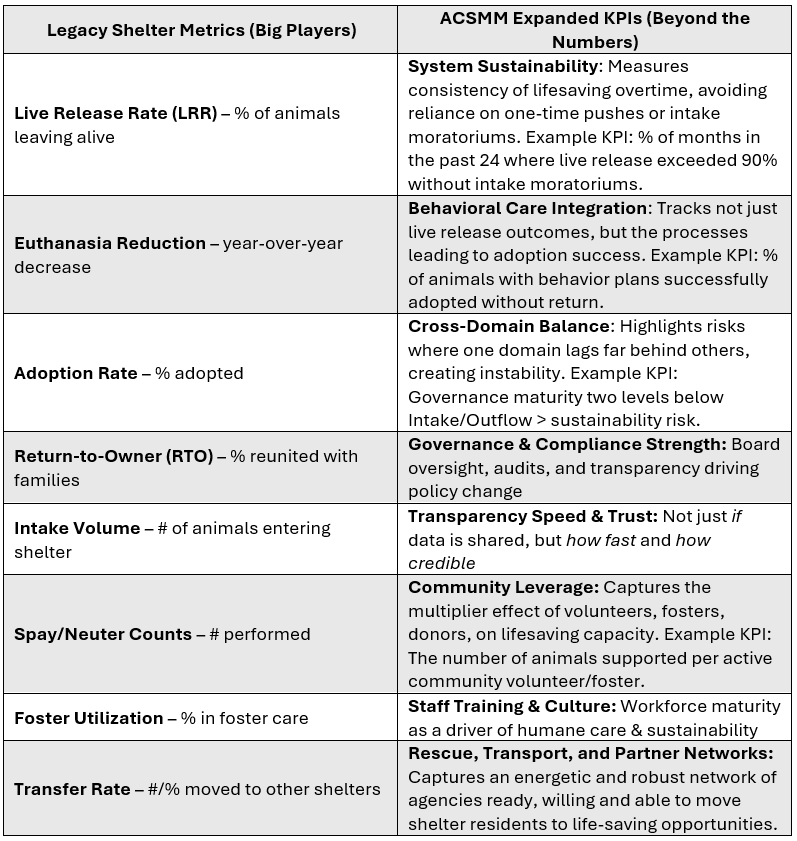
Forward Looking - Measuring Shelter Success – Legacy Metrics vs. ACSMM KPI’s
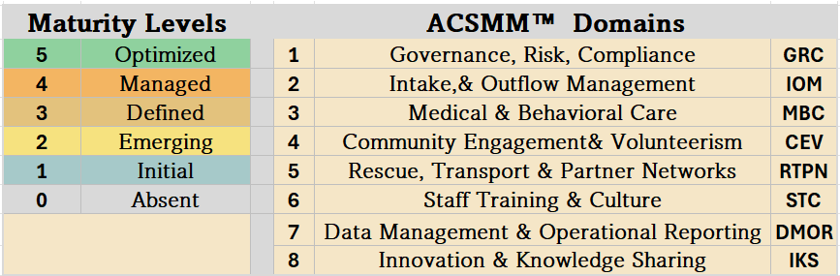
Traditional national organizations tend to measure shelter success using live release rates and intake/outcome statistics, but the Animal Care Shelter Maturity Model (ACSMM™) broadens this view. ACSMM tracks not only these numbers but also organizational maturity, sustainability, and systems-thinking practices that foster long-term lifesaving outcomes. Additionally, ACSMM adds a qualitative dimension, evaluating maturity across leadership, medical care, and community engagement. Its framework connects numbers to practices and asks difficult questions: Are positive outcomes sustainable or just temporary?
Its KPIs evolve alongside organizational growth. ACSMM does not discard established metrics; it builds upon them, creating a broader framework that prioritizes maturity, transparency, and sustainability. By redefining success, ACSMM™ empowers shelters to achieve enduring, systemic lifesaving outcomes rather than focusing solely on short-term numerical improvements. These evolving KPIs shift the conversation toward lasting practices, making ACSMM™ the first maturity model for animal shelters to measure not only results, but the systems that sustain those results.
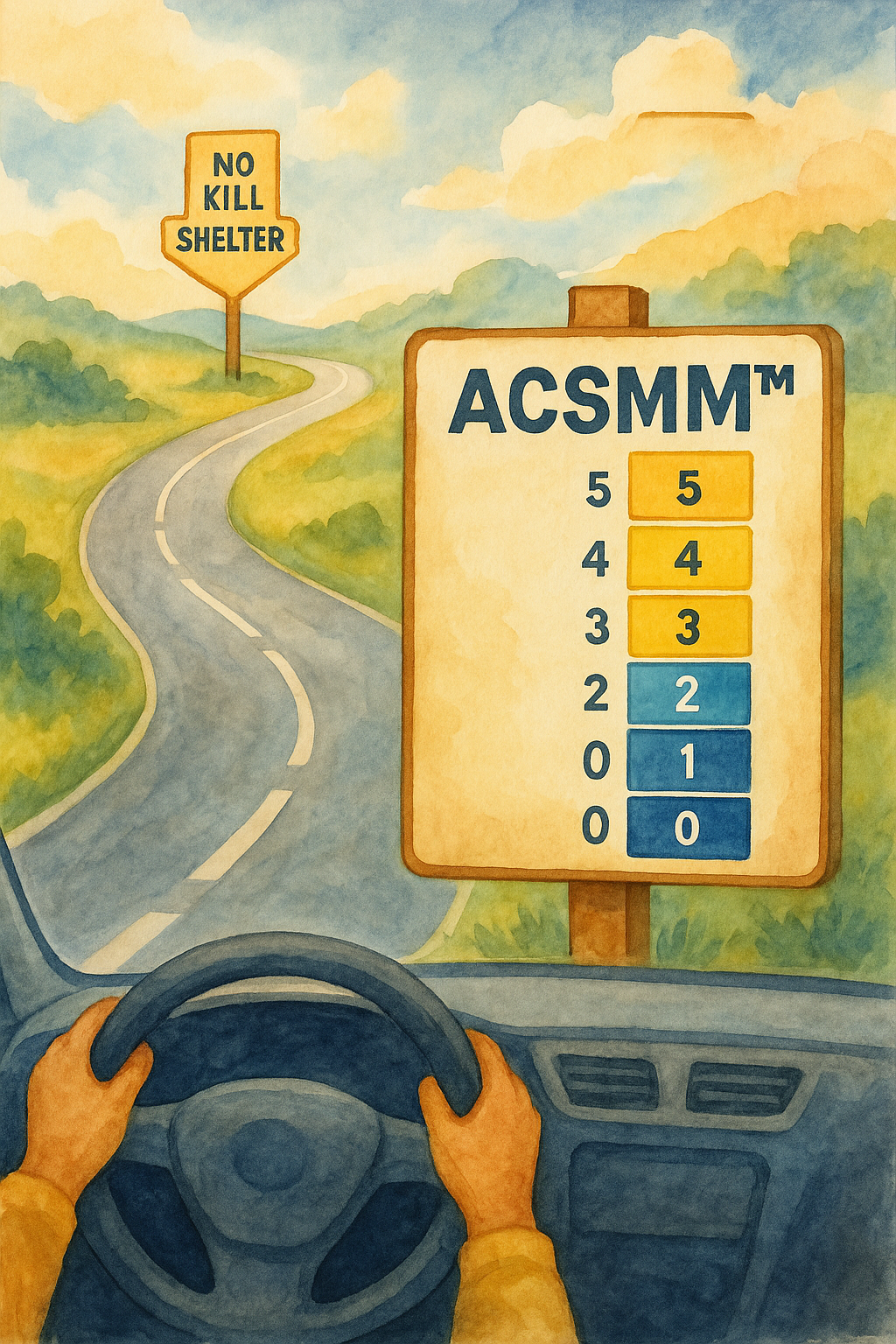
““ACSMM offers a clear windshield, with a compass pointing toward lifesaving systems.””
KPI Comparison: Legacy Metrics vs. ACSMM™
From Numbers to Systems
ACSMM™ goes further than traditional metrics, offering a framework that enables any shelter to move from simply reporting data to consistently saving lives through robust systems. While legacy approaches focus on past outcomes, much like glancing in a rearview mirror, ACSMM™ broadens the perspective—honoring the lessons of history while actively shaping the present and guiding future progress along a defined roadmap to saving lives.
Conclusion
The truth isn’t in one number. The truth is in the systems behind those numbers. And that’s why ACSMM matters. Without ACSMM, shelters are left driving by the rearview mirror, chasing numbers that don’t last. With ACSMM, they gain a roadmap to lasting lifesaving systems. Such a framework is the key to future shelter success.
The ACSMM™ Institute
ACSMM™ | Advancing and Accelerating the Path to Shelter Lifesaving
If your organization is interested in:
• Becoming an early adopter or pilot partner
• Helping test or refine ACSMM tools
• Exploring how the model complements your current strategies
Let’s connect and explore how we can advance lifesaving together.
Marv Serhan
Founder & Director
The ACSMM™ Institute
www.acsmm.org | marv@acsmm.org